Skip links
Insurance and Recovery Economics: Preparing for Black Swan Events
Earlier designs cut node risk by 73%, but the unpredictable 27% needs different rules. This study fixes how a staking insurance pool is sized (15% of stake, not protected value), bootstrapped, and banded; why a reserve held in its own token collapses with it; and how session protection follows the sync-degree hierarchy when security breaks mid-session.
Oraclizer Core ⋅ May 29, 2026
Node Compensation Framework: Multi-layered Reward Design
After designing how the node incentive pool survives 7.6 years, an unresolved question remained: how are those rewards distributed to individual nodes? Three pressures conflict, and no single-mode distribution satisfies all three. A three-layer framework with activity, throughput, and session continuity, paired with phase-evolving weights, resolves the trilemma.
Oraclizer Core ⋅ May 13, 2026
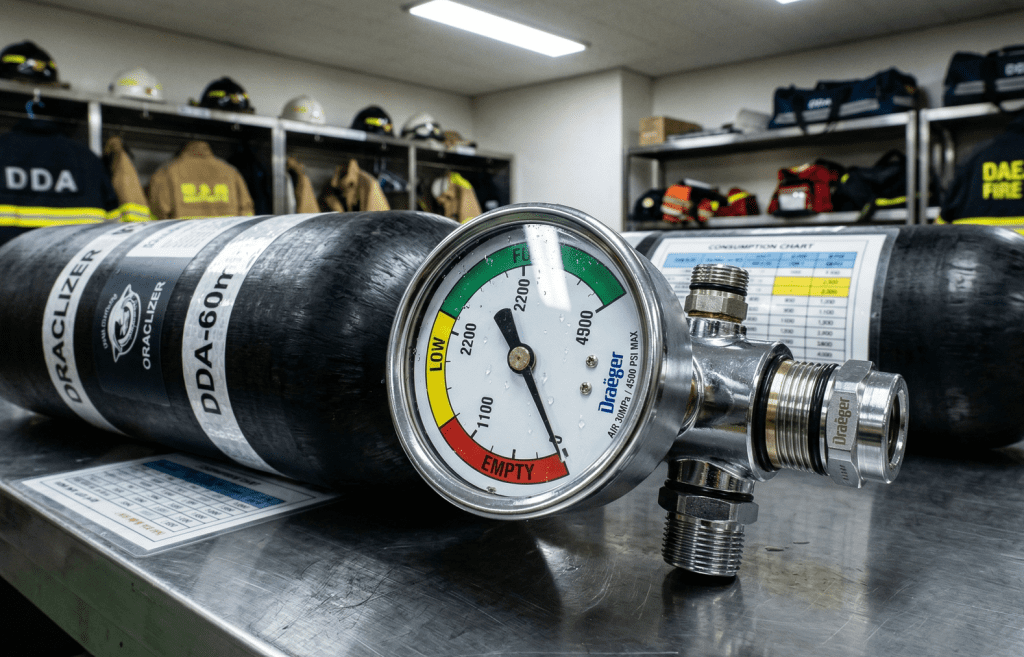
SCBA air cylinder pressure gauge showing remaining capacity in the green zone with yellow and red alert zones ahead, representing the node incentive pool reserve levels and three-stage emergency protocol thresholds.
How do block rewards and oracle fees converge into sustainable node compensation? This study designs a 2-Tier Node Incentive Pool with exponential decay, where the reward pool splits into Primary (2.1B OZ) and Sustainability Reserve (0.9B OZ), engineered for 7.6-year no-fee survival.
Oraclizer Core ⋅ Mar 22, 2026
Slashing Mathematics: Enforcing Security Through Economic Penalties
This research designs a slashing framework for Oraclizer's oracle state machine, distinguishing penalties (liveness faults) from slashing (safety violations) based on Ethereum and Cosmos precedents. We derive violation-specific slashing rates from expected loss calculus, introduce oracle-specific infraction categories including invalid state proofs and regulatory non-compliance, and formalize dynamic adjustment mechanisms with circuit breakers for token price volatility.
Oraclizer Core ⋅ Feb 11, 2026
Oracle Session Security: Staking for Continuous State Protection
This research establishes the complete staking parameter framework for Oraclizer's session-based security model. It introduces the Security Reserve Pool mechanism for controlled decentralization and the Session Security Framework, which reinterprets continuous state synchronization protection as a time-integral security requirement, fundamentally distinguishing oracle state machine economics from traditional block-based validation models.
Oraclizer Core ⋅ Jan 04, 2026
Economic Security Requirements: Quantifying Protection Needs
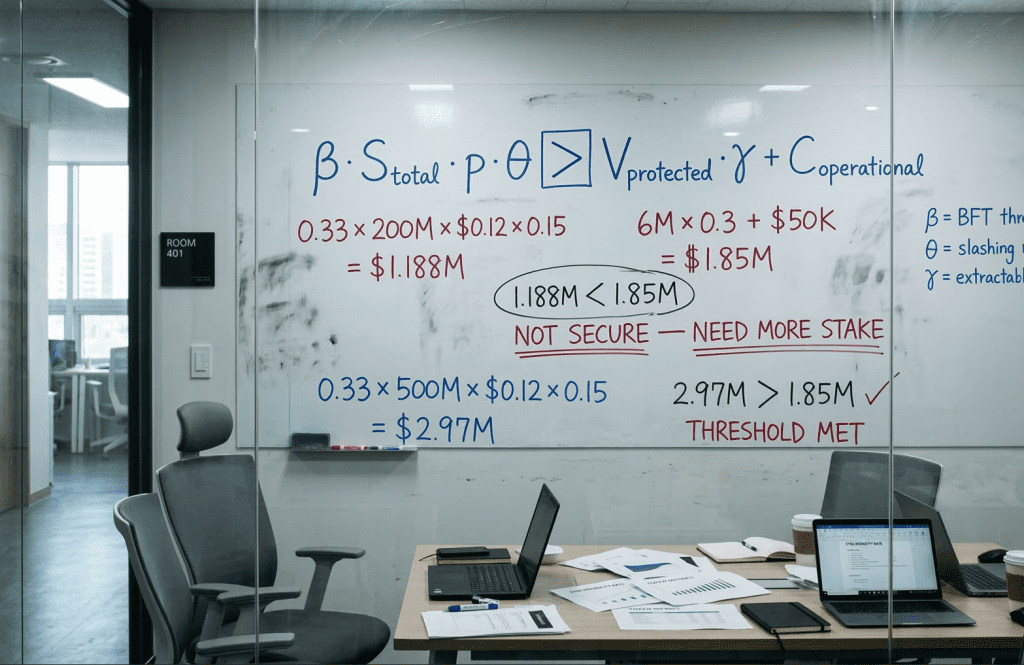
Economic security in PoS networks requires attack costs to exceed potential profits. Analyzing security models from Ethereum, Cosmos, and Polkadot, this research derives the Security Threshold Formula for the State Synchronization Economy. We establish the quantitative framework, incorporating BFT, slashing, and state synchronization factors, to determine staking requirements.
Oraclizer Core ⋅ Dec 12, 2025
Token Flow Mechanics in State Subscription Economy: Circulation and Retention Strategy
In the State Subscription economy, tokens circulate at three distinct velocities. Pay-per-sync creates rapid circulation through immediate consumption, Growth Credit generates medium-speed flow via prepayment and gradual utilization, and Enterprise Subscription produces slow circulation through long-term lockup. This multi-velocity token flow structure is not merely a design choice but an essential characteristic of the State Subscription blockchain economic model.
Oraclizer Core ⋅ Nov 08, 2025
Service Revenue Foundation: From Customer Payments to System Distribution for State Synchronization Economy Sustainability
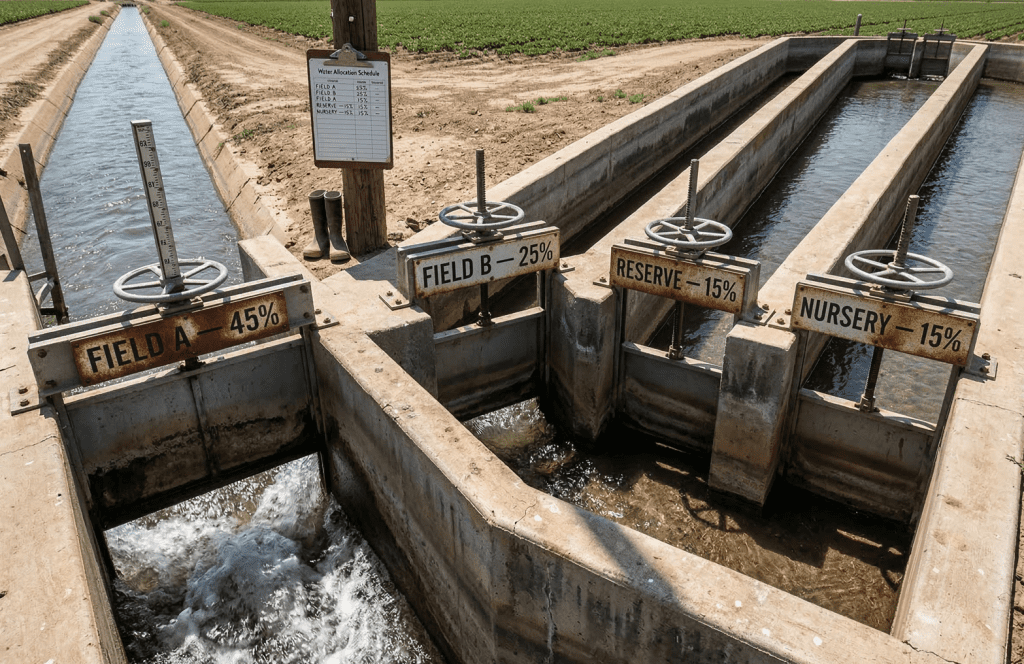
Having validated the execution feasibility of the 3-tier pricing strategy, we mathematically demonstrated that a 4-way revenue distribution mechanism (nodes 45%, operations 25%, insurance 15%, development 15%) meets all stakeholder needs. Utilizing an OZ token payment system and tier-differentiated insurance contribution, we reduced node tail risk by 73% and secured profitability within three years
Oraclizer Core ⋅ Oct 26, 2025
From Node Risk Imbalance to Multi-Tier Economics: Designing Sustainable Oracle Rewards
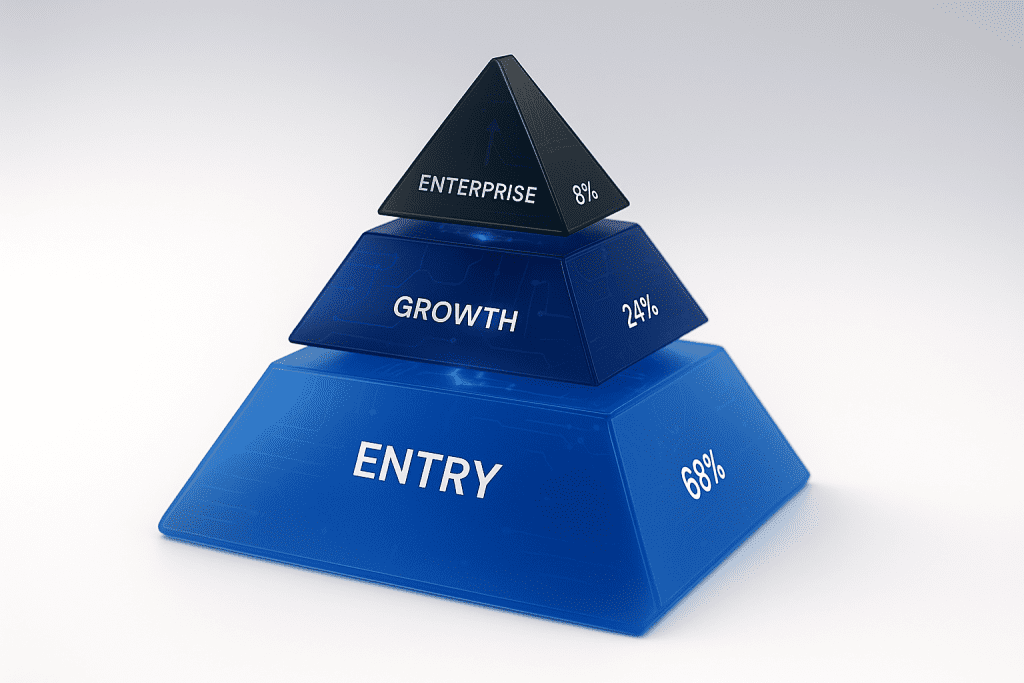
This research mathematically proves how a multi-layered strategy comprising Entry Level (Session-based Package), Growth Level (Prepaid Credits), and Enterprise Level (Flat Subscription) can establish risk hedging mechanisms for node operators while ensuring system-wide economic sustainability through cross-subsidization.
Oraclizer Core ⋅ Oct 17, 2025
Cost Structure Analysis: The Economics of Continuous State Flow in State Synchronization Economy
Continuous state synchronization exhibits fundamentally different cost structures than discrete API calls, and we mathematically prove that a single pricing model cannot fairly handle all usage frequencies. By introducing the Oracle Session concept, we clearly distinguish between fixed costs (initial connection) and variable costs (intra-session synchronization), deriving boundary values for three distinct frequency bands.
Oraclizer Core ⋅ Oct 11, 2025
1