Skip links
Sync Degree Hierarchy: Classifying What Assets Demand from State Synchronization
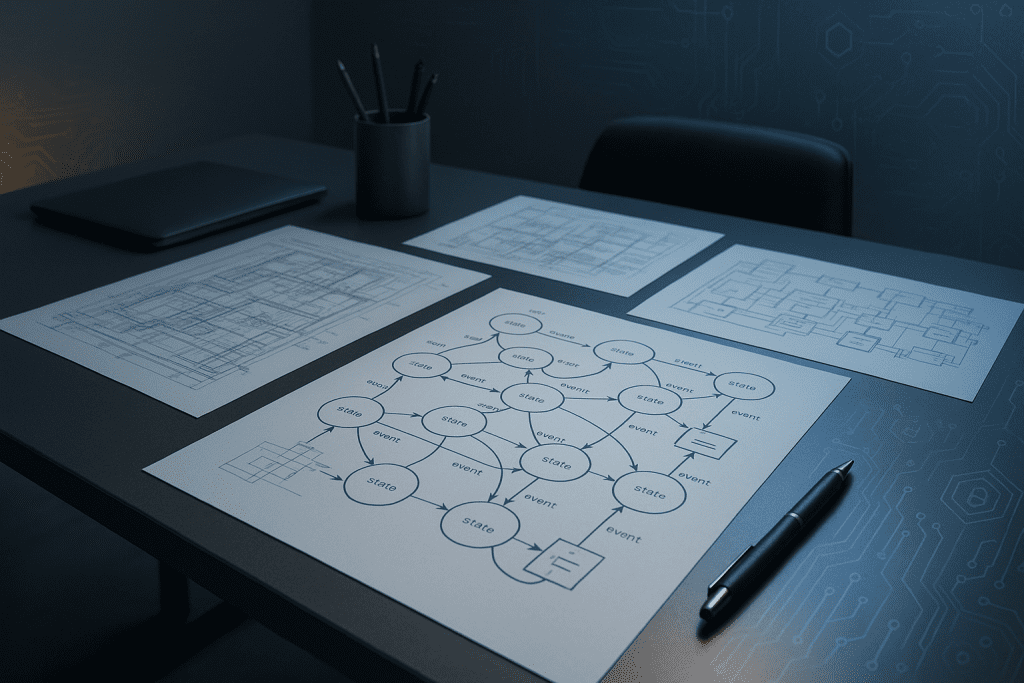
Sync degree hierarchy turns sync requirement strength into a four-level classification axis for RWA assets. S₀ static through S₃ atomic state binding form a reduction relation where causal consistency separates S₁ from S₂. Existing oracles, structurally two independent channels, are capped at S₁ by definition. Regulatory action forces S₃.
Oraclizer Core ⋅ May 20, 2026
The Privacy Paradox of Bidirectional State Synchronization
Bidirectional state synchronization creates a unique privacy paradox: you must disclose to synchronize, yet disclosure destroys privacy. This research presents Oraclizer's four-layer privacy stack that resolves this through a "Need to Know" architecture and DA-based confidential storage accessible only to authorized parties.
Oraclizer Core ⋅ Feb 06, 2026
GKR Protocol Deep Dive: The Computational Engine Behind OSS
The GKR protocol transforms OSS from a theoretical construct into a practical reality by eliminating intermediate commitments. This deep dive explores the mathematical foundations—ranging from Sumcheck protocols to multilinear extensions—that enable OSS to achieve 20-30× faster proof generation than traditional zkProvers.
Oraclizer Core ⋅ Jan 24, 2026
Why State Oracle Demand a Different Proof Primitive
State oracles require proving continuous state flows—computationally infeasible with traditional SNARKs due to intermediate commitment overhead. This research reveals that the GKR protocol is not merely an optimization but an essential precondition for oracle state machine to exist, reducing proof generation computation by 99%.
Oraclizer Core ⋅ Dec 28, 2025
DA Architecture Design Principles for Oracle State Machine
Data availability is not an optimization for oracle state machines—it is an existential condition. When DA fails in a general rollup, transactions are delayed. When DA fails in an oracle state machine, the trust foundation of bidirectional state synchronization collapses entirely. This research establishes the DA requirements unique to oracle state machines and explains why Oraclizer adopts DAS-based DA with validity proofs as the only viable path for regulatory-compliant state synchronization.
Oraclizer Core ⋅ Dec 24, 2025
The Forgotten Pioneer: How a Lesson from 8 Years Ago Shaped Oracle State Machine Design
In 2017, a curious encounter with an obscure blockchain project called Factom planted seeds that would unconsciously shape the architectural decisions behind Oraclizer's oracle state machine eight years later. This reflection traces the unexpected intellectual lineage from Factom's two-layer architecture to our Validium and external DA strategy—a journey of rediscovering why certain design choices felt so "obvious."
Oraclizer Core ⋅ Dec 03, 2025
Building the Oracle State Machine: L3 zk-Rollup Architecture for State Synchronization
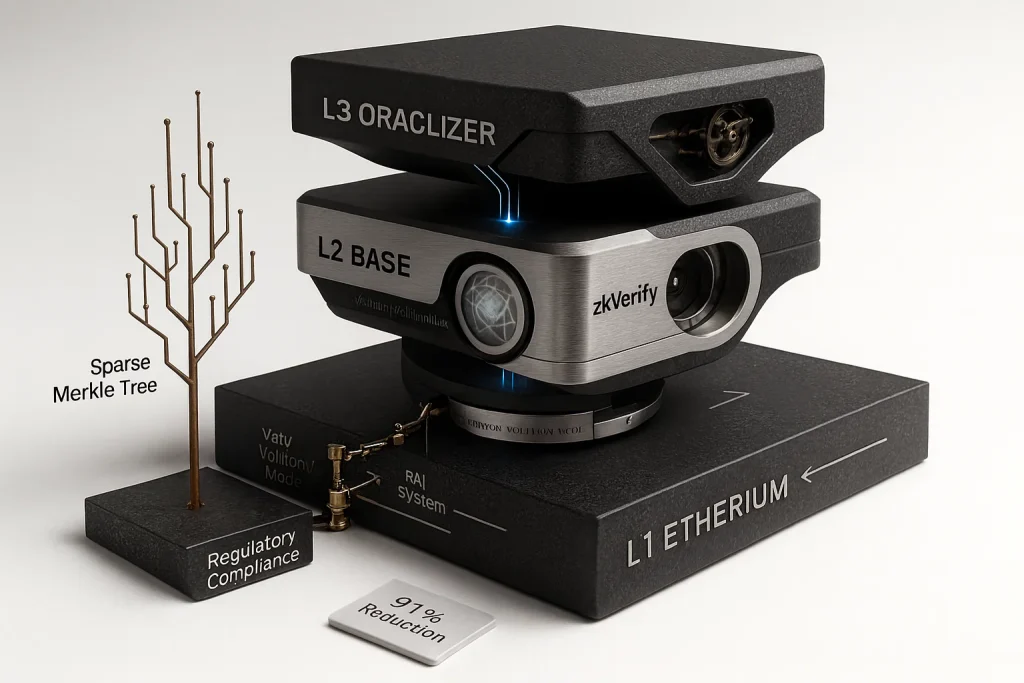
Oraclizer's L3 zk-Rollup architecture is built on Polygon CDK atop Base L2, forming a complete cryptographic finality chain extending to Ethereum L1. This article reveals key design decisions and implementation details derived from our actual development process. Oraclizer implements auditable privacy that allows selective access by regulatory authorities—going beyond simple privacy. This is not merely technical innovation, but essential infrastructure for structural harmony between financial regulation and blockchain innovation.
Oraclizer Core ⋅ Nov 15, 2025
Sparse Merkle Trees in Oracle State Synchronization: The Mathematical Necessity Beyond Choice
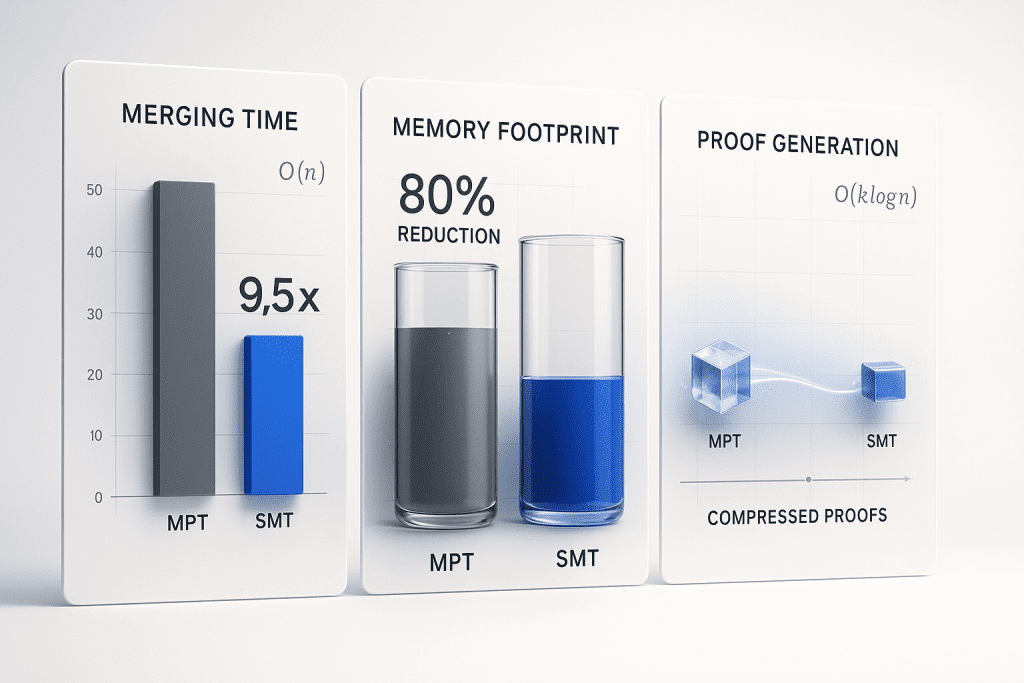
In particular, we present mathematical proofs demonstrating how Merkle Patricia Trie's (MPT) path compression creates non-deterministic tree structures during state merging, and how variable depth makes consistency guarantees impossible in cross-chain verification. This reveals that Oraclizer's adoption of SMT was not merely a technical stack selection, but the only viable path to achieve state synchronization.
Oraclizer Core ⋅ Oct 04, 2025
Economic Sustainability Model of the State Machine: State Subscription
Our journey has now opened a new chapter. Through our first Economy article, "State Subscription: Blockchain's First Recurring Payment Revolution," we will begin exploring the world of the state subscription economy in earnest. This new research goes beyond simple economic model design to address a fundamental paradigm shift in blockchain economics. We will explore the transition from one-time transactions to continuous services, from linear value creation to network effects, and from risk concentration to risk distribution.
Oraclizer Core ⋅ Sep 24, 2025