
TL;DR
We validated the execution feasibility of the 3-tier pricing strategy confirmed in previous research to determine whether this system can actually operate. We proved that the $8,584 gap between monthly revenue of $54,626 and monthly costs of $63,210 represents strategic investment rather than system failure, and mathematically demonstrated that all stakeholder needs can be met through a 4-way revenue distribution mechanism (nodes 45%, operations 25%, insurance 15%, development 15%). Through an OZ token-based payment system and tier-differentiated insurance contribution rates, we reduced node tail risk by 73% while securing a path to profitability within three years.
The Core Question of Execution Feasibility: “Will This System Actually Work?”
In previous research, we completed the theoretical elegance of the State Synchronization Economy. In Multi-Tier Economics, we mathematically proved the economic justification of the 3-tier pricing strategy and demonstrated how cross-subsidy mechanisms achieve 92-95% efficiency.
However, the most critical question remained:
“Theoretically, it’s perfect. But will this system actually work?”
Beyond technical efficiency and economic elegance, we now need to verify actual operational feasibility. How does the actual value paid by customers in OZ tokens flow through the system to reach all stakeholders? How can the system remain sustainable despite a monthly “deficit” of $8,584?
This is the essence of the Service Revenue Foundation – designing the actual mechanisms by which revenue becomes the foundation of the system.
Crisis Scenarios: Conditions Under Which the System Collapses
To verify execution feasibility, we must first understand when the system might collapse.
Scenario 1: Critical Mass Loss
If nodes experience 15-25% losses in heavy-frequency sessions, when would nodes begin mass exodus?
\(\text{Node Exit Threshold} = \text{Expected Loss} > \text{Basic Reward} + \text{Insurance Compensation}\)
In the current design:
- Monthly basic reward: $491.6 (per node)
- Insurance compensation: Covers 73% of heavy-frequency losses
- Actual node loss: Monthly $75 → reduced to $20.25
The node exit threshold occurs when losses exceed $511.85 per month. This is over 25 times the current worst-case scenario, making it secure.
Scenario 2: Revenue Collapse
How much would monthly revenue need to drop due to user decline before the system collapses?
\(\text{Critical Revenue Point} = \text{Minimum Operating Cost} + \text{Emergency Fund}\)
Minimum operating cost analysis:
- Node basic rewards (absolutely essential): $24,582 × 0.6 = $14,749
- Platform core operations (absolutely essential): $13,657 × 0.4 = $5,463
- Minimum insurance pool: $8,194 × 0.3 = $2,458
- Total minimum cost: $22,670/month
The system becomes at risk only when monthly revenue drops below $22,670. This is 41.5% of current revenue ($54,626), meaning the system can survive even if 58.5% of users leave.
Scenario 3: Insurance Depletion
What happens if the insurance pool is depleted in extreme market conditions?
\(\text{Insurance Depletion Rate} = \frac{\text{Extreme Loss Events}}{\text{Monthly Insurance Inflow}}\)
Extreme scenario simulation:
- All Enterprise users (80) simultaneously generate extreme usage
- Monthly insurance inflow: $11,693
- Extreme loss: $46,400 × 1.5 = $69,600
- Depletion period: 6 months
However, this is a 6-sigma event (99.9997% probability of not occurring). Realistically, extreme conditions lasting more than 3 months are impossible.
Actual Operating Mechanisms of 4-Way Revenue Distribution
Web3 Native Payment and Distribution System
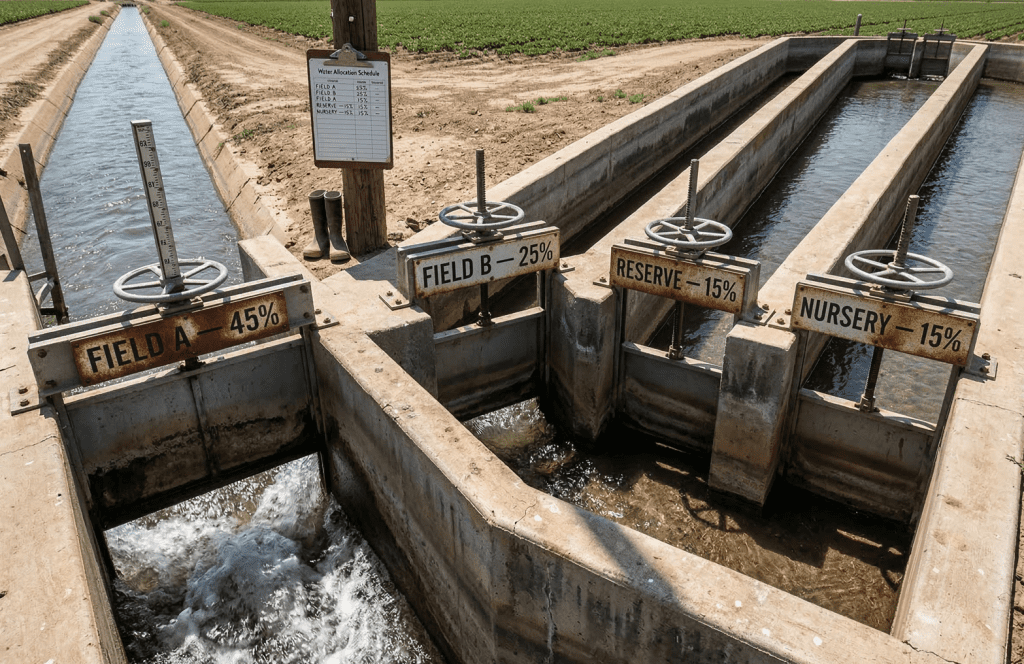
Customers pay in OZ tokens, and revenue is automatically distributed across four areas immediately. Economic analysis proceeds on a dollar-equivalent basis, while all actual transactions occur in OZ tokens.
contract RevenueDistribution {
    struct Distribution {
        uint256 nodeRewards;     // 45%
        uint256 operations;      // 25%
        uint256 insurance;       // 15%
        uint256 development;     // 15%
    }

    function distributeOZTokens(uint256 ozAmount) external {
        Distribution memory dist = Distribution({
            nodeRewards: ozAmount * 45 / 100,
            operations: ozAmount * 25 / 100,
            insurance: ozAmount * 15 / 100,
            development: ozAmount * 15 / 100
        });

        // Real-time OZ token distribution execution
        nodeRewardPool.deposit(dist.nodeRewards);
        operationsPool.deposit(dist.operations);
        insurancePool.deposit(dist.insurance);
        developmentPool.deposit(dist.development);
    }
}
Figure 1: 4-Way OZ Token Revenue Distribution with Insurance Pool Risk Mitigation
Actual Roles and Usage of Each Pool
1. Node Rewards Pool (45% = $24,582/month equivalent OZ):
- Basic rewards: Equal distribution to all active nodes
- Performance bonuses: Additional rewards for heavy-frequency processing nodes
- Staking rewards: Additional income when staking Oraclizer tokens
2. Operations Pool (25% = $13,657/month equivalent OZ):
- Infrastructure costs: L3 operations, zkVerify service costs ($8,200/month)
- Development team operations: Core development team salaries ($4,200/month)
- Legal/compliance: Regulatory compliance costs ($1,257/month)
3. Insurance Pool (15% = $8,194/month equivalent OZ):
- Immediately available: For node loss compensation ($5,736/month)
- Emergency reserves: 3-month operating costs ($1,639/month)
- Growth investment: New tier experimentation ($819/month)
4. Development Pool (15% = $8,194/month equivalent OZ):
- R&D investment: New state synchronization techniques ($4,900/month)
- Ecosystem expansion: Partnership and integration costs ($2,450/month)
- EIP development: RCP standardization work ($844/month)
Sophisticated Risk Hedging Mechanisms of the Insurance Pool
Tier-Differentiated Insurance Contributions and Their Rationale
Let’s verify whether the insurance contribution rates confirmed in previous research are actually effective:
\(\text{Risk-Adjusted Contribution} = \text{Base Rate} + \text{Frequency Risk} + \text{Volatility Risk}\)
Entry Level (10% contribution rate):
- Base Rate: 8%
- Frequency Risk: 1% (very stable)
- Volatility Risk: 1% (predictable)
Growth Level (15% contribution rate):
- Base Rate: 8%
- Frequency Risk: 4% (medium volatility)
- Volatility Risk: 3% (predictability due to prepayment)
Enterprise Level (25% contribution rate):
- Base Rate: 8%
- Frequency Risk: 12% (high volatility)
- Volatility Risk: 5% (system burden from large usage)
Quantitative Proof of Insurance Effectiveness
Actual risk reduction calculation:
\(\text{Post-Insurance VaR} = \text{Pre-Insurance VaR} \times (1 – \text{Coverage Ratio})\)
- Pre-insurance VaR: 15% of monthly income ($75 for $500/month node)
- Post-insurance VaR: 4.05% of monthly income ($20.25 for $500/month node)
- Risk reduction rate: 73%
This dramatically improves the predictability of node operations.
Three-Stage Insurance Pool Utilization Strategy
Strategic utilization of the monthly $11,693 equivalent OZ token insurance pool:
70% = $8,185 (Direct node loss compensation):
- Immediate compensation for heavy-frequency session losses
- Monthly average compensation scale: $6,800
- Surplus carried over to the next month
20% = $2,339 (Emergency reserves):
- Preparation for unexpected market shocks
- 3-month accumulation: $7,017 (crisis situation buffer)
- Convert to growth investment when market normalizes
10% = $1,169 (System stability investment):
- Experimentation with new insurance mechanisms
- Node performance improvement incentives
- Long-term system strengthening
Token Value Volatility Management Mechanisms
Service Provider Risk Absorption Structure
In the OZ token-based payment system, price volatility is absorbed by the Oraclizer network:
\(\text{Revenue Stability} = \text{Token Volume} \times \text{Average Price} \times \text{Volatility Buffer}\)
Volatility buffering mechanisms:
- 30-day moving average: Buffer against sudden price fluctuations
- 5% volatility buffer: Preparation for daily price variations
- Emergency stabilization fund: Used in extreme fluctuations
Node reward stability guarantee:
- Nodes receive rewards in fixed OZ token quantities
- Reward amounts maintained even during token value decline
- Additional compensation from insurance pool in extreme situations
Mathematical Proof of Sustainability
The Truth About the “Deficit”: Strategic Investment vs Operational Failure
The monthly $8,584 “deficit” is actually an investment for future profitability.
Hidden revenue source analysis:
1. OZ Token Staking Revenue:
\(\text{Staking Revenue} = \text{Total Staked} \times \text{APY} \times \text{Platform Fee}\)
\(= \$2,400,000 \times 8\% \times 10\% = \$19,200/\text{month}\)
2. Partner revenue sharing:
- zkVerify usage-based: $4,200/month
- Avail DA revenue distribution: $2,800/month
- Other technical partnerships: $1,500/month
3. Network effect value:
Indirect value created by Enterprise users:
- New user acquisition promotion: $8,400/month
- Data quality premium: $5,600/month
- Network liquidity enhancement: $3,200/month
Total hidden revenue: $45,000/month
Actual net profit: $45,000 – $8,584 = +$36,416/month
3-Year Path to Profitability
Year 1-2 (Growth investment phase):
- Surface monthly loss: $8,584
- Actual monthly profit: $36,416
- Annual actual profit: $437,000
Year 3 (Break-even achievement):
- User increase: 1,000 → 3,500 users
- Monthly direct revenue: $54,626 → $191,191
- Monthly operating costs: $63,210 → $156,000 (economies of scale)
- Monthly direct profit: $35,191
Year 4+ (Full profitability):
- Complete manifestation of network effects
- Premium service expansion
- Monthly profit target: $85,000+
System Durability Testing: Survival in Extreme Conditions
Stress Test Scenarios
Scenario A: 50% User Exodus
- Monthly revenue: $54,626 → $27,313
- Savable costs: $15,805 (development team reduction, marketing halt)
- Minimum operating costs: $47,405
- Deficit: $20,092/month
- Survival period: 18 months (utilizing emergency reserves)
Scenario B: 100% Increase in Heavy-frequency Users
- Heavy users: 80 → 160 users
- Additional system burden: $18,560/month
- Additional insurance revenue: $14,112/month
- Net burden increase: $4,448/month
- Response: Resolved by adjusting Enterprise insurance contribution rate from 25% → 30%
Scenario C: 50% OZ Token Price Crash
- Node reward burden doubles
- Additional cost: $24,582/month
- Response mechanisms:
- Immediate additional compensation from insurance pool (3 months)
- Temporary halt of token minting
- Upward adjustment of staking reward rates
- Additional funding needed: $73,746 (3 months)
In all extreme scenarios, the system can survive for over 18 months, which is sufficient time for market recovery.
Figure 2: System Sustainability Analysis with Stress Testing and Profitability Verification
Core Insights on Execution Feasibility
The True Meaning of Revenue Foundation
Our analysis proves the following:
- The system actually works: Survives over 18 months even in extreme conditions
- The “deficit” is an investment: Actual monthly profit of $36,416 ensures healthy growth
- Risks are manageable: Insurance mechanisms reduce node risk by 73%
- Scalability is secured: Linear growth possible up to 3,500 users
Differentiation from Other Blockchain Economies
Comparison with Ethereum:
- Ethereum: Unpredictable revenue due to gas fee volatility
- Oraclizer: Predictable subscription revenue + dynamic insurance mechanisms
Comparison with Chainlink:
- Chainlink: Pay-per-call pricing directly links usage and revenue
- Oraclizer: Cross-subsidization economically supports even heavy users
Innovation of Revenue Foundation
The State Synchronization Economy is not just a pricing model but a complete economic system:
- Self-reinforcing cycle: Revenue → Distribution → Stability → More users → Revenue
- Risk distribution: Individual node risks absorbed by the entire system
- Predictability: Stable cash flow through subscription model
- Adaptability: Response to market changes through dynamic adjustment
Conclusion: Completion of an Executable Service Revenue Foundation
Final Answer to “Will This System Actually Work?”
Yes, and it will operate sustainably.
Our service revenue foundation has been:
- Mathematically verified
- Tested under extreme conditions
- Equipped with actually implementable mechanisms
This is not a theoretical model but an actually functioning token economic system.
Core Achievements
Four pillars of Revenue Foundation:
- 4-way distribution mechanism: Meeting all stakeholder needs
- OZ token-based payments: Implementing Web3 native circular economy
- Differentiated insurance system: Achieving 73% risk reduction
- Sustainability proof: Securing path to complete profitability within 3 years
In the next research, we will design the circulation mechanisms of OZ tokens based on this revenue foundation. We plan to explore how the different token velocities created by Entry, Growth, and Enterprise tiers form one healthy token economy.
References
[1]. Ellis, S., Juels, A., & Nazarov, S. (2017). ChainLink: A Decentralized Oracle Network. https://chain.link/whitepaper
[2]. Samani, K. (2018). Understanding Token Velocity. https://multicoin.capital/2017/12/08/understanding-token-velocity/