Skip links
EIP-RCP: Why Tokenized Capital Markets Need a Regulatory
The EIP-RCP Informational EIP draft is now complete. This protocol provides a common vocabulary and framework for regulatory compliance interoperability in tokenized capital markets. This article explains the motivation, rationale, and significance of the proposal for the Ethereum ecosystem.
Oraclizer Core ⋅ Dec 20, 2025
Economic Security Requirements: Quantifying Protection Needs
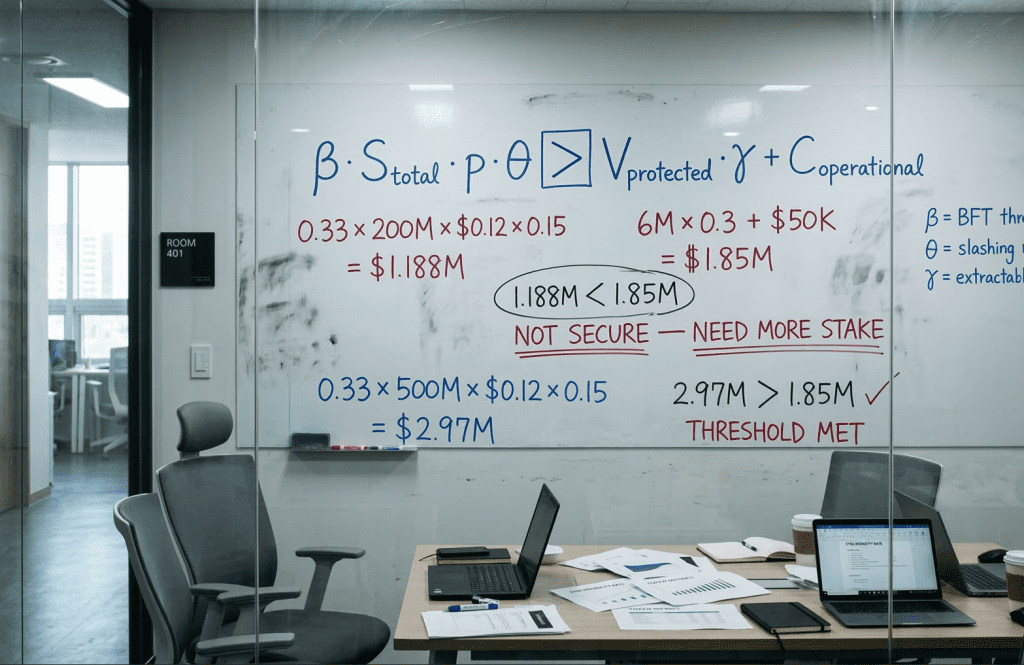
Economic security in PoS networks requires attack costs to exceed potential profits. Analyzing security models from Ethereum, Cosmos, and Polkadot, this research derives the Security Threshold Formula for the State Synchronization Economy. We establish the quantitative framework, incorporating BFT, slashing, and state synchronization factors, to determine staking requirements.
Oraclizer Core ⋅ Dec 12, 2025
The Dual-Track EIP Strategy: Independence, Governance, and Execution
Our dual-track EIP strategy (EIP-RCP and ERC-TRUST) is a philosophical necessity. Separating the conceptual framework from technical implementation creates independent value streams and resilient pathways for regulatory compliance, regardless of approval outcomes. This approach, supported by Horizen Labs, is crucial for building the institutional future of the Ethereum ecosystem.
Oraclizer Core ⋅ Dec 11, 2025
The Forgotten Pioneer: How a Lesson from 8 Years Ago Shaped Oracle State Machine Design
In 2017, a curious encounter with an obscure blockchain project called Factom planted seeds that would unconsciously shape the architectural decisions behind Oraclizer's oracle state machine eight years later. This reflection traces the unexpected intellectual lineage from Factom's two-layer architecture to our Validium and external DA strategy—a journey of rediscovering why certain design choices felt so "obvious."
Oraclizer Core ⋅ Dec 03, 2025
Dissecting ERC-1400 and ERC-3643: The Technical Case for a New Standard
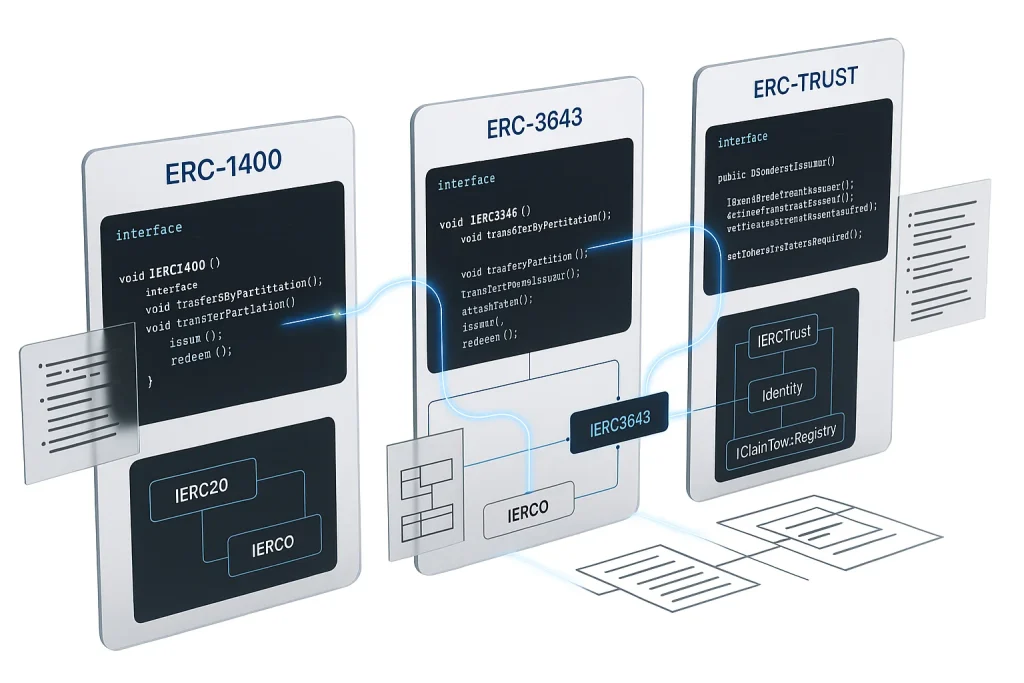
A code-level analysis of why ERC-1400 and ERC-3643 cannot meet modern regulatory requirements. We examine the fatal limitations of controllerTransfer, fragmentation issues, and why extension is technically impossible. ERC-TRUST offers evolutionary succession—maintaining compatibility while implementing complete regulatory compliance for tokenized assets.
Oraclizer Core ⋅ Nov 30, 2025
Why Oraclizer Chose DAML/CANTON: The Only Path to $6 Trillion in Institutional Liquidity
The Canton Network is an operational DLT hosting $6 trillion in tokenized real-world assets, adopted by major financial institutions like Goldman Sachs for solving privacy and legal finality issues via DAML/CANTON. Oraclizer positions itself as the only bidirectional bridge connecting this massive financial liquidity with DeFi.
Oraclizer Core ⋅ Nov 22, 2025
Building the Oracle State Machine: L3 zk-Rollup Architecture for State Synchronization
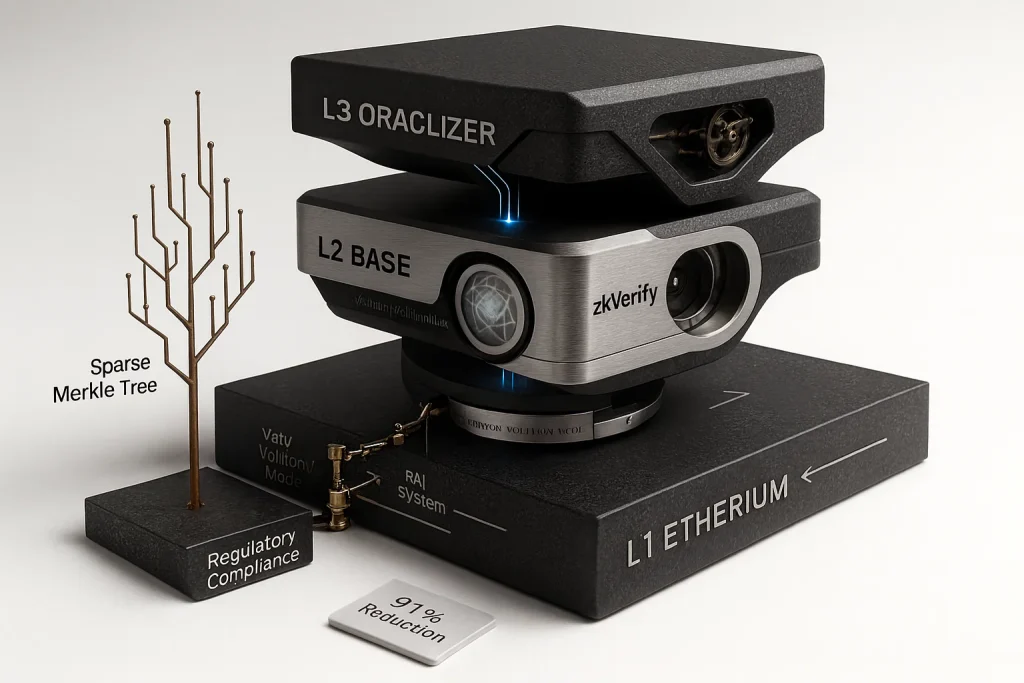
Oraclizer's L3 zk-Rollup architecture is built on Polygon CDK atop Base L2, forming a complete cryptographic finality chain extending to Ethereum L1. This article reveals key design decisions and implementation details derived from our actual development process. Oraclizer implements auditable privacy that allows selective access by regulatory authorities—going beyond simple privacy. This is not merely technical innovation, but essential infrastructure for structural harmony between financial regulation and blockchain innovation.
Oraclizer Core ⋅ Nov 15, 2025
Token Flow Mechanics in State Subscription Economy: Circulation and Retention Strategy
In the State Subscription economy, tokens circulate at three distinct velocities. Pay-per-sync creates rapid circulation through immediate consumption, Growth Credit generates medium-speed flow via prepayment and gradual utilization, and Enterprise Subscription produces slow circulation through long-term lockup. This multi-velocity token flow structure is not merely a design choice but an essential characteristic of the State Subscription blockchain economic model.
Oraclizer Core ⋅ Nov 08, 2025