Skip links
OIP Architecture Design Principles
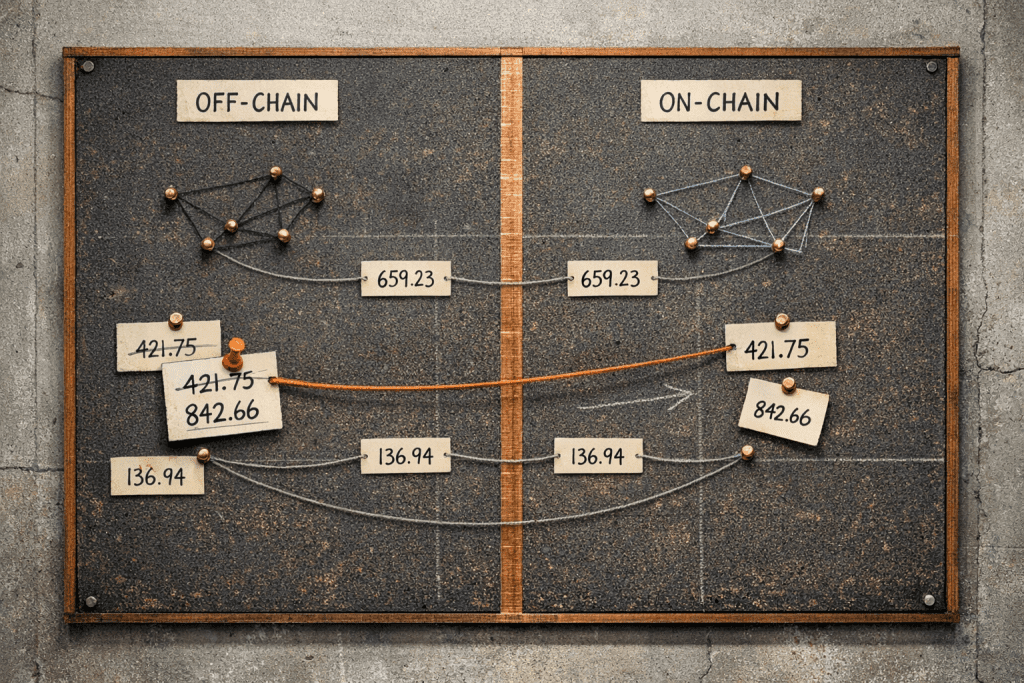
The Oracle Interoperability Protocol (OIP) is the first protocol framework designed to implement complete state synchronization, with its architecture based on five core design principles. It prioritizes regulatory compliance while establishing system scalability, state consistency, interoperability, and balance between privacy and transparency as its technical foundation. These principles enable true state synchronization between on-chain and off-chain worlds, presenting a new paradigm for RWA integration in capital markets.
Oraclizer Core ⋅ May 21, 2025

Announcing Horizen Partnership – Part 2: Ecosystem Integration
Oraclizer announces the second phase of our strategic partnership with Horizen. Both projects are strengthening technical synergy through joint transition to the Base L2 ecosystem, integrating Oraclizer's state synchronization technology with Horizen's zkVerify to effectively bridge the gap between DeFi and tokenized real-world assets.
Oraclizer Core ⋅ May 15, 2025
Announcing Our Partnership with Horizen – Part 1: Technical Synergy
We are thrilled to announce our strategic partnership with Horizen, a collaboration set to revolutionize the blockchain ecosystem. By integrating Horizen's cutting-edge zkVerify technology with Oraclizer's state synchronization protocol, we aim to enhance regulatory compliance and efficiency in decentralized finance and Real World Asset (RWA) tokenization. This partnership not only addresses critical scalability challenges but also lays the groundwork for bringing the $30+ trillion RWA market on-chain. Discover how our combined technologies will unlock new possibilities for developers and financial institutions alike, ushering in a new era of innovation and asset interoperability.
Oraclizer Core ⋅ May 08, 2025
The Necessity of Regulatory Compliance Protocol (RCP)
In tokenized capital markets, regulatory compliance is not optional but essential. The Regulatory Compliance Protocol (RCP) serves as a fundamental framework for asset interoperability between TradFi and DeFi by systematically integrating requirements from various financial regulatory bodies. RCP is structured around five core groups
Oraclizer Core ⋅ May 08, 2025
Technical Challenges of Cross-Chain State Synchronization
Cross-chain state synchronization goes beyond simple data transfer to ensure complete asset state consistency between different blockchain ecosystems. Heterogeneous consensus mechanisms, differences in block finality, and transaction processing speed gaps serve as core technical barriers to true state synchronization. Ensuring atomicity in cross-chain message delivery and resolving state conflicts are essential elements of a reliable state synchronization solution. Economic viability is a decisive factor for the success of state synchronization solutions, requiring gas cost optimization and efficient verification mechanisms. Oraclizer is developing innovative solutions to these challenges through L3 zkRollup architecture and state transition proof optimization.
Oraclizer Core ⋅ May 08, 2025
Oracle Technology Evolution: From Data Points to State Transitions
Explore how oracle technology has evolved from simple data transmitters to the innovative Oracle State Machine. This important change allows for full state synchronization between on-chain and off-chain systems, enabling a true connection between real-world assets (RWAs) and decentralized finance (DeFi). As we delve into the effects of this shift, we reveal how regulatory compliance and state synchronization can transform the interaction between blockchain and traditional finance, creating new opportunities for liquidity, market efficiency, and financial inclusion. Join us in discovering the future of tokenized capital markets and the promising potential of the Oracle State Machine.
Oraclizer Core ⋅ May 08, 2025
The Present and Future of Real World Asset Tokenization
Beyond native digital assets, the tokenization of Real World Assets (RWAs) has emerged as the next innovation frontier in blockchain technology. According to Boston Consulting Group's analysis, the tokenized asset market is projected to reach $16 trillion by 2030, representing approximately 10% of global GDP
Oraclizer Core ⋅ May 07, 2025
What is State Synchronization?
State synchronization replaces discrete data point delivery with complete state consistency across on-chain and off-chain systems. Unlike traditional oracles transmitting isolated values, this paradigm preserves full context, permissions, and regulatory compliance within every state transition, enabling atomic updates across all connected systems.
Oraclizer Core ⋅ May 07, 2025