
TL;DR
- Continuous state synchronization exhibits fundamentally different cost structures than discrete API calls, and we mathematically prove that a single pricing model cannot fairly handle all usage frequencies.
- By introducing the Oracle Session concept, we clearly distinguish between fixed costs (initial connection) and variable costs (intra-session synchronization), deriving boundary values for three distinct frequency bands.
- While the Pay-per-sync model proves efficient in Light-frequency and Medium-frequency bands, we quantitatively demonstrate structural losses occurring in the Heavy-frequency band.
- Mathematical modeling of node operators’ tail risk and unpredictable revenue volatility establishes the necessity for multi-tier economic models and cushioning mechanisms.
In our previous research, we explored the economic potential that the revolutionary paradigm of state synchronization could bring. Technical efficiency through L3 architecture and zkVerify integration was clearly an achievable goal. But we came to realize that technical success alone isn’t enough.
When actually operating a state synchronization system through Oracle Sessions, the economic reality that node operators would face was far more complex than we initially anticipated. There exists a fundamental difference in cost structure between “calling a new API each time” and “synchronizing continuous states.”
Oracle Session: The Basic Unit of State Synchronization
To understand the economics of state synchronization, we must first define a new concept: Oracle Session. An Oracle Session represents the state synchronization contract period between a single owner of a specific Real World Asset (RWA) and the Oraclizer network.
Each Oracle Session has clear boundaries:
Session Start Conditions:
- New RWA tokenization and initial issuance
- Ownership transfer of existing RWA (on-chain transfer)
- Initial state registration from off-chain to on-chain
Session End Conditions:
- On-chain transfer of asset ownership (new session starts with new owner)
- Asset maturity/burn/extinction
- Regulatory authority forced termination (CONFISCATE, SEIZE, etc.)
This session structure demands a completely different cost model from traditional oracle one-time calls. While initial connection costs (Fixed Cost) occur at the start of an Oracle Session, each state synchronization within the session requires only relatively low variable costs (Marginal Cost).
Modeling the Oracle Session Cost Function
To analyze the economic characteristics of Oracle Sessions, we defined the total cost function based on synchronization frequency as follows:
\(C_{total}(f) = C_{fixed} + c_{marginal}(f) \cdot f + R_{overhead}(f)\)
Where:
- \(C_{fixed}\): Fixed cost at session start (initial state setup, oracle contract creation)
- \(c_{marginal}(f)\): Unit synchronization cost based on frequency \(f\)
- \(R_{overhead}(f)\): Additional resource overhead at high frequencies
Importantly, \(c_{marginal}(f)\) is not a simple constant. As synchronization frequency increases, it exhibits the following band-specific characteristics:
$$c_{marginal}(f) = \begin{cases} c_0 & \text{if } f \leq f_1 \text{ (Light-frequency)} \\ c_0 \cdot (1 + \alpha \log(f/f_1)) & \text{if } f_1 < f \leq f_2 \text{ (Medium-frequency)} \\ c_0 \cdot (1 + \beta \sqrt{f/f_2}) & \text{if } f > f_2 \text{ (Heavy-frequency)} \end{cases}$$
Unit Cost Analysis and Discovery of Frequency Bands
More importantly, the behavior of unit cost \(U(f) = C_{total}(f)/f\) reveals interesting patterns when analyzed:
\(U(f) = \frac{C_{fixed}}{f} + c_{marginal}(f) + \frac{R_{overhead}(f)}{f}\)
Through simulation, we identified three distinct bands:
Light-frequency band (\(f \leq 50\) times/year):
- Fixed cost amortization effect dominates
- Unit cost decreases sharply with increasing frequency
- Pay-per-sync model most efficient
Medium-frequency band (\(50 < f \leq 200\) times/year):
- Balance point between fixed and variable costs
- Unit cost decreases gently or plateaus
- Pay-per-sync model still efficient
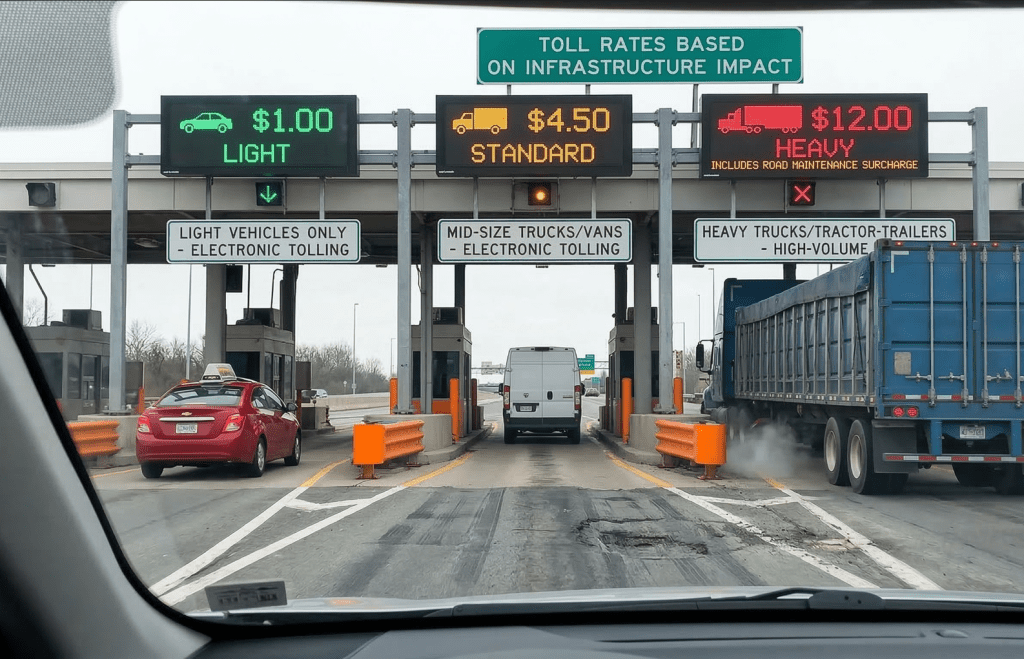
Heavy-frequency band (\(f > 200\) times/year):
- Resource overhead increases dramatically
- Unit cost begins to rise again
- Structural losses occur in Pay-per-sync model
Risk-Revenue Analysis from Node Operators’ Perspective
From a node operator’s perspective, the most serious issue is unpredictable revenue volatility. Under the Pay-per-sync model, a node operator’s expected revenue is modeled as:
\(E[R_{node}] = \sum_{s} P(s) \cdot R_{session}(s)\)
Where \(P(s)\) is the probability of session \(s\) occurring, and \(R_{session}(s)\) is the revenue from that session.
The problem arises with Heavy-frequency sessions. These sessions:
- Comprise only 5-8% of all sessions
- Account for 60-70% of total network load
- Cause unpredictable losses for individual nodes
Specifically, nodes handling Heavy-frequency sessions experience the following losses:
\(Loss_{heavy}(f) = \left(c_{marginal}(f) + \frac{R_{overhead}(f)}{f}\right) \cdot f – Revenue_{pps}(f)\)
Where \(Revenue_{pps}(f) = p_{sync} \cdot f\) and \(p_{sync}\) is the fixed fee per synchronization.
According to our simulations, node loss rates reach 15-25% for sessions where \(f > 300\) times/year.
Tail Risk and the Need for Cushioning Mechanisms
The tail risk faced by node operators within each Oracle Session can be quantified as:
\(VaR_{95\%} = \inf\{x : P(Loss \leq x) \geq 0.95\}\)
Monte Carlo simulation results show that node operators are exposed to potential losses equivalent to 12-18% of monthly revenue at the 95% confidence interval. This isn’t just a profitability issue—it’s a matter of network stability.
This risk structure clearly demonstrates the need for economic cushioning mechanisms:
- Risk Pooling: Network-wide absorption of Heavy-frequency session losses
- Predictable Revenue: Minimum revenue guarantee for node operators
- Fair Burden Distribution: High-frequency users bear additional costs
Economic Justification for Multi-Tier Economic Models
Our analysis clearly reveals structural limitations that cannot be resolved with a single Pay-per-sync model:
Efficient Range: Light + Medium frequency sessions (92-95% of total)
- Pay-per-sync model achieves optimal efficiency
- Fair value provided to both nodes and users
Problem Range: Heavy-frequency sessions (5-8% of total)
- Structural losses occur in Pay-per-sync model
- Account for 60-70% of total network load
- Alternative economic model needed
This provides economic justification for a multi-tier Oracle Session pricing system:
- Entry Level: Pay-per-sync (targeting Light-frequency sessions)
- Growth Level: Prepaid credits (targeting Medium-frequency sessions)
- Enterprise Level: Flat-rate subscription (targeting Heavy-frequency sessions)
Future Oracle Session Research Directions
This analysis has established the following key parameters:
- Frequency band boundaries: Light (≤50 times/year), Medium (50-200 times/year), Heavy (>200 times/year)
- Pay-per-sync efficiency range: 92-95% of all sessions
- Heavy-frequency loss rate: 15-25%
- Node tail risk: 12-18% of monthly revenue
Our next research will explore service revenue structure design and node compensation mechanisms based on these findings. Key challenges will be how to economically hedge structural losses in the Heavy-frequency band and how to achieve fair value distribution for all stakeholders through a multi-tier pricing system.
References
[1]. Cong, L. W., Fox, L., Li, S., & Zhou, L. (2025). A primer on oracle economics. Research in International Business and Finance, 73, 102410.
[2]. Caldarelli, G. (2022). Overview of blockchain oracle research. Future Internet, 14(6), 175.
[3]. Harvard Business School. (2023). With subscription fatigue setting in, companies need to think hard about fees. Harvard Business School Working Knowledge.